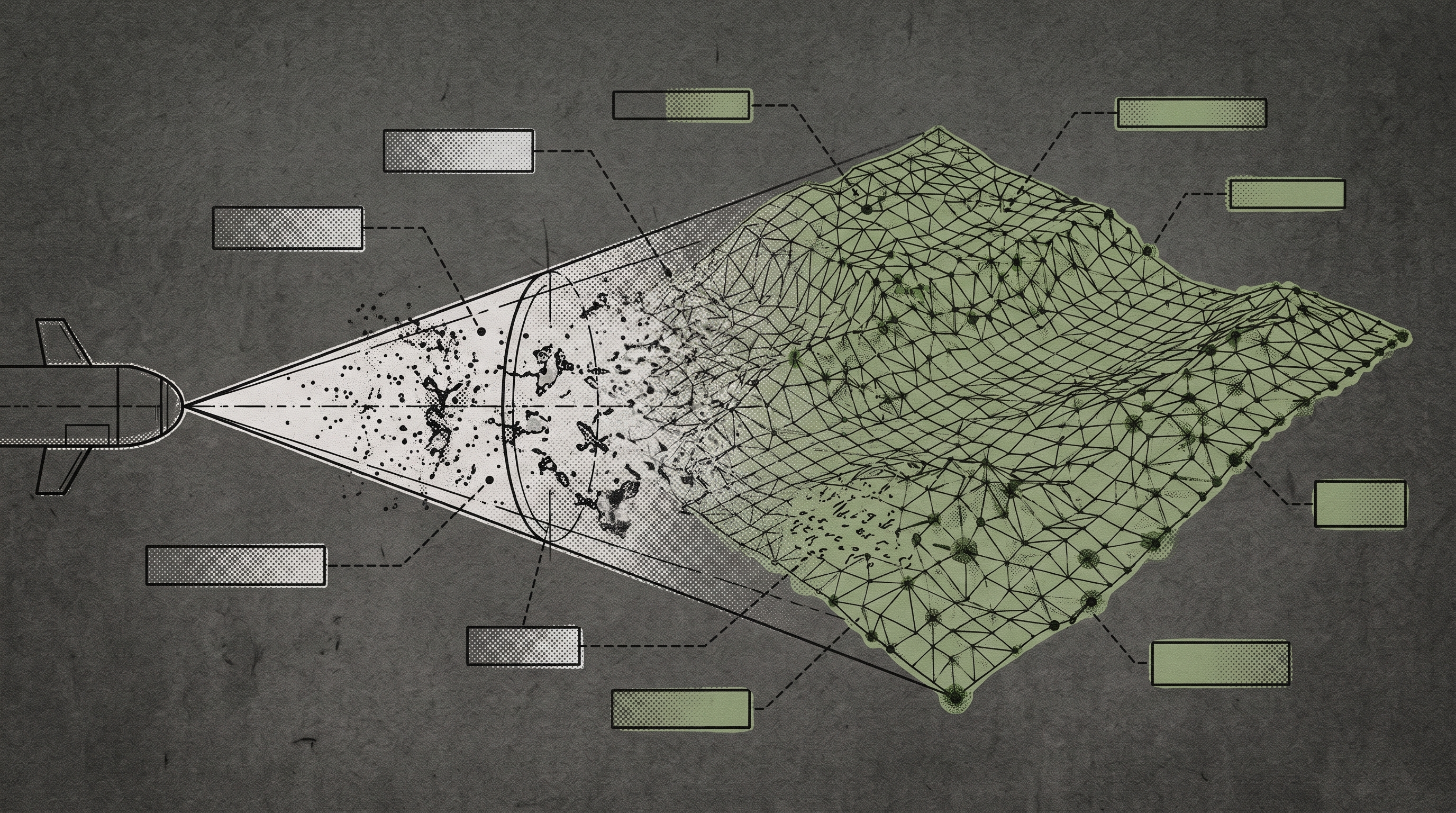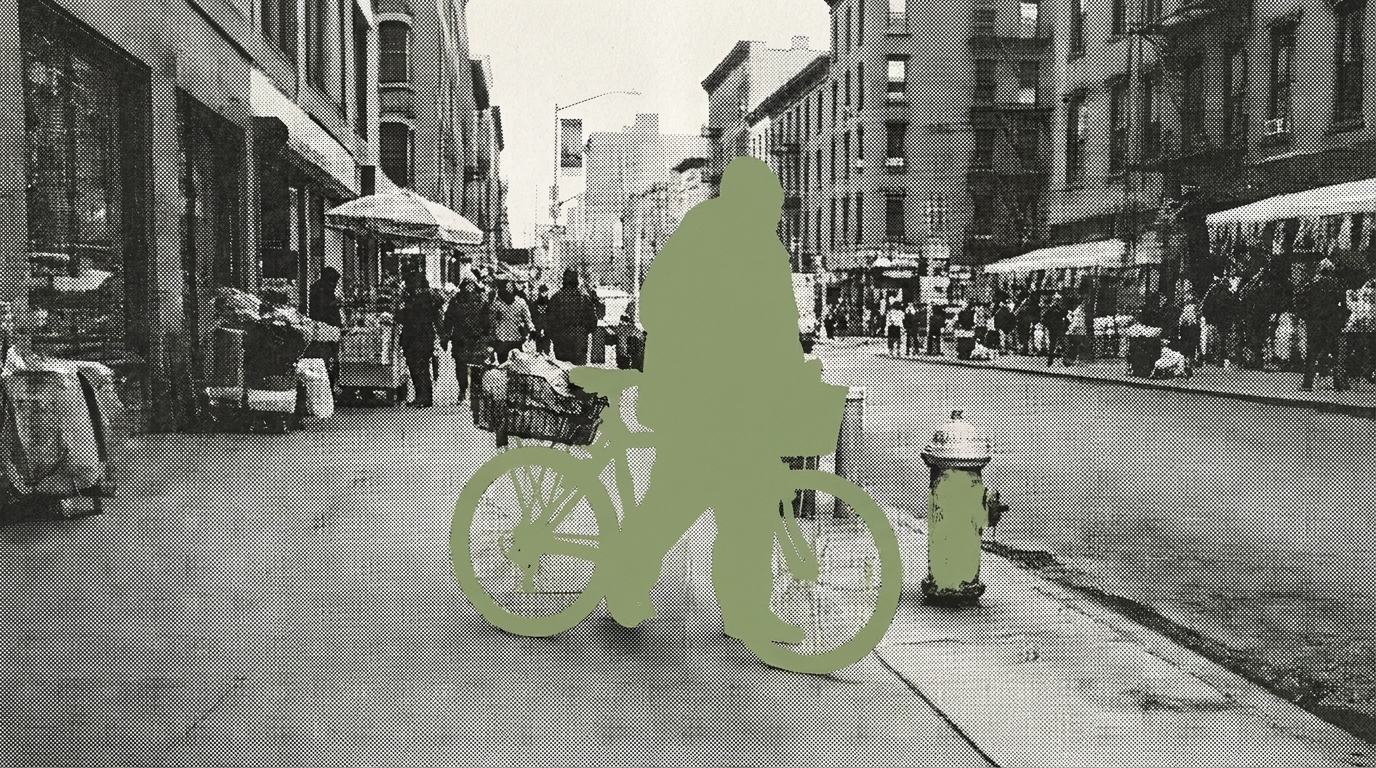
Machines spot a car easily when it’s centered, clean, and camera-ready. Put that car behind a stroller in a busy street scene, and many systems freeze.
Common objects, uncommon ambition
A team spanning academia and industry built Microsoft COCO—Common Objects in Context—to close that gap. COCO is a giant image dataset designed to push machine vision beyond neat, single-object pictures toward full “scene understanding”: not just what’s there, but where it is, how it overlaps, and how objects relate. Think of it as training machines to see the world the way people do in everyday life, not in product photos.
COCO’s twist is simple and powerful. It favors non-iconic views—objects that are off-center, partly hidden, small, or crammed into clutter. Instead of asking the internet for “dog,” the team searched Flickr for pairs like “dog + car,” or object–scene combinations like “bicycle + street.” The result is 328,000 images with real-world messiness, 91 everyday categories (“things” like person, chair, bus), and 2.5 million labeled instances. On average, each image holds 3.5 categories and 7.7 objects—far denser than earlier benchmarks.
The protagonist is the mask
Most datasets draw boxes around objects. Boxes are quick, but they’re blunt instruments. A person doing yoga fills only a sliver of the “tight” box; the rest is background. COCO upped the standard by labeling every instance with a pixel-precise outline—an “instance segmentation” mask. If boxes are shipping labels, masks are the cut lines. They let researchers measure not just whether a system found the cat, but whether it traced the cat, and only the cat.
That precision changed the target for algorithms. It also forced a rethink in annotation: if every instance in a photo needs a mask, how do you collect millions of them without breaking the bank?
Teaching the crowd to see
COCO’s pipeline turned crowdsourcing into a relay. First, workers labeled categories using a smart shortcut: instead of 91 yes/no questions per image, they answered 11 “super-category” prompts (animals, vehicles, furniture…) and dragged an icon for any present category onto one example object. Next came “instance spotting,” where workers clicked every instance of each category, aided by a magnifier for tiny objects. Finally, trained workers traced each instance with a polygonal mask.
Quality control was surprisingly human—and surprisingly effective. The union of eight crowd workers caught more true categories than any single expert did. For clear positives, the chance that all eight missed the object was about 0.4%. Before segmenting, workers had to pass a hands-on test per category; only about one in three made the cut. Every mask then went through verification by 3–5 people; weak masks were rejected and re-done. When instances were too dense to separate cleanly—think a packed audience or a heap of bananas—annotators painted a single “crowd” region. Those areas are marked so algorithms aren’t penalized for not splitting indistinguishable neighbors.
Harder on purpose
How much harder is “in context” vision? The team trained a classic object detector and tested it on PASCAL VOC (a leading benchmark) and on COCO. Average precision on COCO dropped by roughly a factor of two. That wasn’t a failure; it was the point. COCO’s small, occluded, and cluttered objects expose blind spots in models built for iconic views. Training on COCO also improved cross-dataset generalization for several categories, a hint that learning from hard scenes can produce sturdier vision—once models have the capacity to handle the variability.
COCO didn’t just raise difficulty; it raised measurement standards. Evaluating a detection by its mask, not its box, revealed how far algorithms still had to go on articulated shapes like people. Pasting “average shape” templates into boxes produced low overlaps with ground-truth masks even when the box itself was correct.
Why this changed the field
By insisting on context and by making the mask the star, COCO reframed what progress looks like. It nudged research toward multi-object reasoning, small-object recognition, and fine-grained localization—all crucial for robots in homes, cars in cities, and assistive tech in the wild. It also built a foundation for richer tasks that followed, from instance and panoptic segmentation to image captioning (COCO includes five human-written captions per image).
There’s more to do. COCO began with “things,” not “stuff” (materials like sky or grass that don’t come in countable units), and it leaves relationships—who’s riding, holding, wearing—to future layers of understanding. But it reset expectations in one stroke: if a four-year-old can name the objects in a bustling scene, machines should learn to do it there too, in context and down to the pixel.