Imagine taking an absolute closed-book exam covering every topic in human history. You must answer every question perfectly, but you cannot consult a single reference text. If you forget a detail, your brain logically invents a confident, highly believable lie to fill the gap. Until recently, artificial intelligence operated in this exact predicament.
Large language models process vast amounts of text during their initial training, absorbing grammar, logic, and facts. They store this knowledge in internal mathematical connections known as parametric memory. When asked a specific question months later, the model guesses the answer based on these deeply embedded patterns rather than actively looking up the facts. When the model forgets or fails to store a specific piece of information, it routinely presents fabricated text as absolute truth. Researchers call this phenomenon a hallucination.
The Limits of a Closed-Book Brain
Relying entirely on parametric memory creates major roadblocks for reliable AI. You cannot easily peek inside a model’s invisible mathematical weights to see exactly why it generated a specific claim. Furthermore, updating the system is incredibly difficult. If a world leader resigns, the model’s internal memory becomes instantly outdated. Teaching the model the new reality requires burning massive computing power to retrain the whole system from scratch.
A hybrid approach called Retrieval-Augmented Generation, or RAG, offers a totally different architecture. Instead of forcing a computer to blindly memorize the internet, developers give the model an external database to search through before it ever speaks. This creates a highly readable, easily updated system that anchors linguistic creativity in cold, hard facts.
Giving the AI a Search Engine
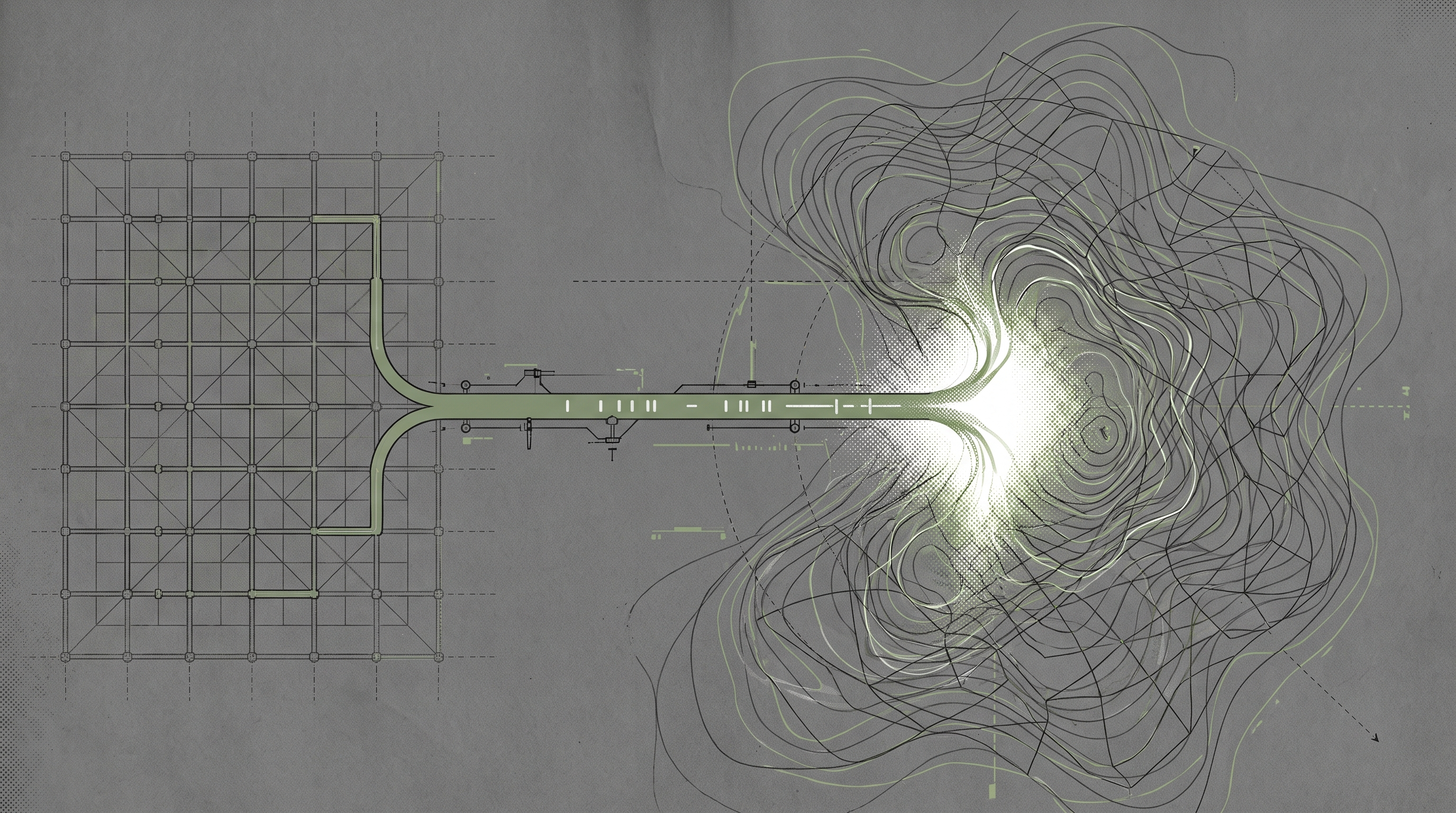
RAG operates by dividing the labor between two distinct modules. A retriever acts as a rapid search engine, taking a user query and fetching a few highly relevant text chunks from a database—acting exactly like a reference librarian. This database serves as the system’s non-parametric memory. In one major experiment, researchers used the entirety of Wikipedia, neatly sliced into 21 million chunks of 100 words each.
After locating the relevant text, the system hands those documents over to a generator module. The generator reads the external clues alongside the original question and synthesizes a grammatically flawless answer. The system learns to do this end-to-end. Without relying on human supervisors to point out the exactly correct sentences, the system computationally evaluates the documents in the background to deduce which text chunks result in the most accurate final answers.
Synthesizing Clues Mid-Sentence
When answering complex questions, a RAG system behaves dynamically. Under a setting called RAG-Token, the model can actually pull from a different document for every single word it generates.
This process sounds chaotic, prompting the question of how an AI keeps its grammar intact while rapidly switching sources mid-sentence. The model succeeds because it relies on its deep internal linguistic training to maintain sentence structure, using the external documents strictly as factual anchors. When challenged to write complex Jeopardy! clues, the system dynamically shifts its attention. It might look at a document about Ernest Hemingway to write the words “A Farewell to Arms,” and seamlessly pivot to a completely different document to finish the sentence with “The Sun Also Rises.”
Excitingly, the generator often produces correct statements even when the exact phrasing does not exist in any single retrieved document. By reading related information, the AI uses the external text to jog its internal linguistic memory, writing a completely original synthesis rather than just copying and pasting quotes.
Swapping the Worldview
Because a strictly generative model locks its knowledge inside its parameters at the time of training, it becomes functionally obsolete the moment the world changes. With RAG, updating the system’s worldview takes seconds.
Researchers demonstrated this adaptability by organizing an experiment with global politicians. They asked their model, “Who is the President of Peru?” while plugged into a Wikipedia database strictly from 2016. The model accurately named the 2016 officeholder. The researchers then unhooked the 2016 database and attached a fresh 2018 database. Without editing a single line of the AI’s internal programming, the model instantly provided the correct 2018 president.
This behaves exactly like swapping a video game cartridge while the console is still running. The core software remains totally untouched, but the reality the system operates within changes instantly.
The Future of Factual Machines
When evaluated by human testers, RAG systems hallucinate far less and ground their statements in physical, human-readable text. If the machine makes a factual error, operators can physically open the database, read the exact document the AI looked at, and correct the bad information.
Relying on an external database introduces a potent new variable into artificial intelligence. The AI is entirely dependent on the quality of its index. If you swap a heavily researched encyclopedia for an index filled with conspiracy theories, the AI will fluently and correctly process that fiction. By shifting the burden of truth from a machine’s hidden math to a searchable text index, RAG fundamentally solves the hallucination mystery—while simultaneously putting the responsibility for truth directly back onto the humans writing the databases.