The Limit of the Space-Gazing Eye
A multi-billion-dollar space telescope drifting a million miles from Earth seems like the ultimate way to look at the stars. Vacuum conditions provide a perfectly clear view, free from weather and shimmering air. Yet, when astronomers want to find out if a single speck of light is actually two stars locked in a tight gravitational embrace, they often turn their backs on space. Instead, they rely on a ground-based observatory perched on a mountain in Chile.
Despite the monumental achievements of missions like the European Space Agency’s Gaia satellite, ground-based astronomical tools can still outpace the competition in one crucial metric. By using a specialized camera on the 4.1-meter SOuthern Astrophysical Research (SOAR) telescope, astronomers are mapping star systems that are physically too close for current space probes to untangle. But how do you beat a space telescope while looking through Earth’s turbulent atmosphere?
Freezing the Cosmic Blur
When you look at a star, the air above you bends and distorts the light. Even the air trapped inside the observatory building itself causes a shimmering effect known as dome seeing. Looking through this is like trying to read a coin at the bottom of a rushing river.
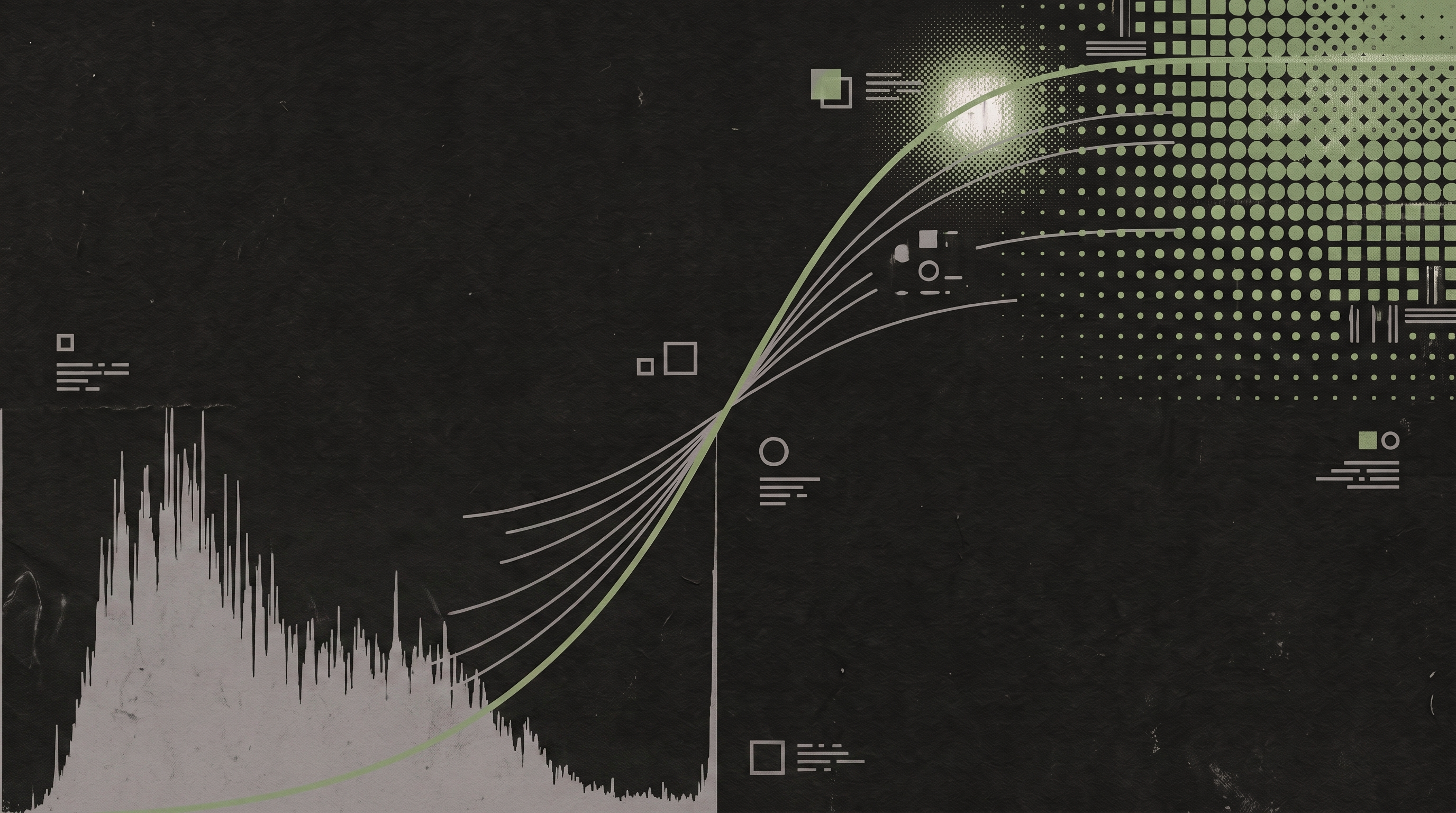
To bypass this distortion, astronomers use a technique called speckle interferometry. Instead of taking one long photographic exposure, the SOAR telescope’s high-resolution camera shoots thousands of ultra-fast pictures, each just 25 milliseconds long. This blistering industrial pace freezes the atmospheric turbulence into distinct, speckled patterns of light. By mathematically stacking these thousands of snapshots together, researchers reconstruct a razor-sharp image of the stars.
This method allows the team to distinguish two stars separated by fractions of a milliarcsecond. That level of precision is equivalent to identifying a coin located in another city. With this extreme zoom, the researchers set out to catalog our local stellar neighborhood, uncovering hidden companions and solving long-standing cosmic mysteries.
Cosmic Matryoshka Dolls and Ghost Stars
During recent observing runs, the SOAR team examined thousands of star systems, making an astonishing 5,316 highly precise positional measurements. They discovered more than 400 new binary pairs that other sweeps of the sky completely missed.
Many of these discoveries were hiding in plain sight. In several cases, looking at known wide binaries revealed them to be complex multiple-star systems. Astronomers found several double twins, where a faint companion orbiting a larger star is actually two tiny stars dancing around each other. What looked like two stars was suddenly unmasked as four.
The telescope also checked the neighborhoods around exohosts, stars strongly suspected of harboring orbiting planets. The team found that over 200 of these stars are actually binary systems. This changes the math entirely. If a suspected planet is actually orbiting two stars instead of one, its size, orbit, and potential for life must be drastically recalculated.
Just as importantly, the team used the new data to clean up the historical record. Decades ago, astronomers manually mapped the stars or used older optical equipment. Sometimes, instrumental quirks created optical ghosts, reflecting light inside the telescope and tricking observers into believing they saw a companion star. The SOAR team hunted down 49 of these bogus binaries, proving definitively that they are just single, solitary stars.
A Violent History Written in Gravity
Because researchers have been watching these systems for years, they can track the exact gravitational paths the stars take. Some of these orbits are highly unusual and carry the scars of ancient, chaotic events.
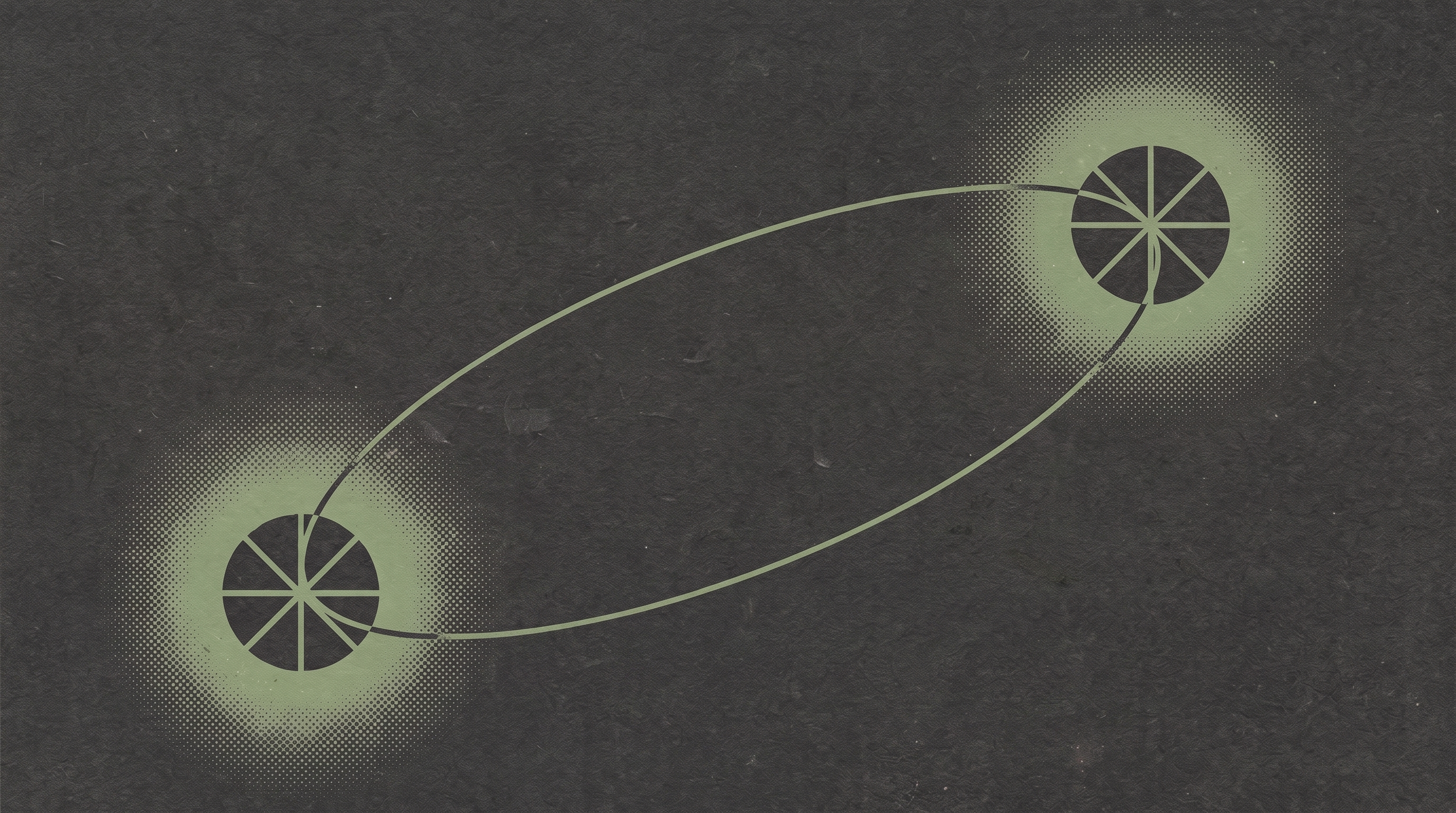
Usually, binary companions orbit each other in somewhat circular patterns. Gravity favors predictable, stabilizing loops over long periods of time. The SOAR team found one pair of sun-like stars with a wildly different trajectory. Their orbit has an eccentricity of 0.9866. On a scale where zero is a perfect circle and one is a straight line, these two suns are flying in a dangerously stretched oval. They spend decades falling toward one another, slingshotting past at a distance closer than Mercury is to our sun, and then flying far out into space again.
Twin stars formed from the same disk of cosmic gas inevitably settle into circular orbits. To get a slingshot trajectory this extreme, something chaotic must have intervened. The researchers deduce that this pair was once part of a three-star system. Millions of years ago, orbital instability caused a violent gravitational reshuffling. A third star was brutally kicked out into deep space, leaving the surviving pair locked in a highly stretched, hyper-fast orbit.
Why the Local Universe Matters
Watching a star move is the only direct way humans can measure its mass. By surveying the oldest, metal-poor stars in our galaxy and charting the bizarre orbits of double twins, astronomers test the fundamental rules of stellar evolution.
Space telescopes will continue to map the galaxy in breathtaking numbers. But to truly unblur the finest details of the cosmos, astronomers must still rely on fast cameras, sharp math, and the summit of a mountain in Chile.