When we feed a massive dataset into a powerful computer, we expect it to spit out absolute truth. But modern algorithms have a fatal, deeply human flaw: if left to their own devices, they will hallucinate. They will memorize random static, confuse coincidences with laws of physics, and find faces in the clouds.
To stop a mathematical model from over-analyzing random noise, we have to restrict it. We must force it to be simple. But if we make it too simple, it becomes stiff and blind to the actual underlying reality. This tension is known as the bias-variance trade-off, and navigating it requires setting a tuning parameter.
The Goldilocks Dial
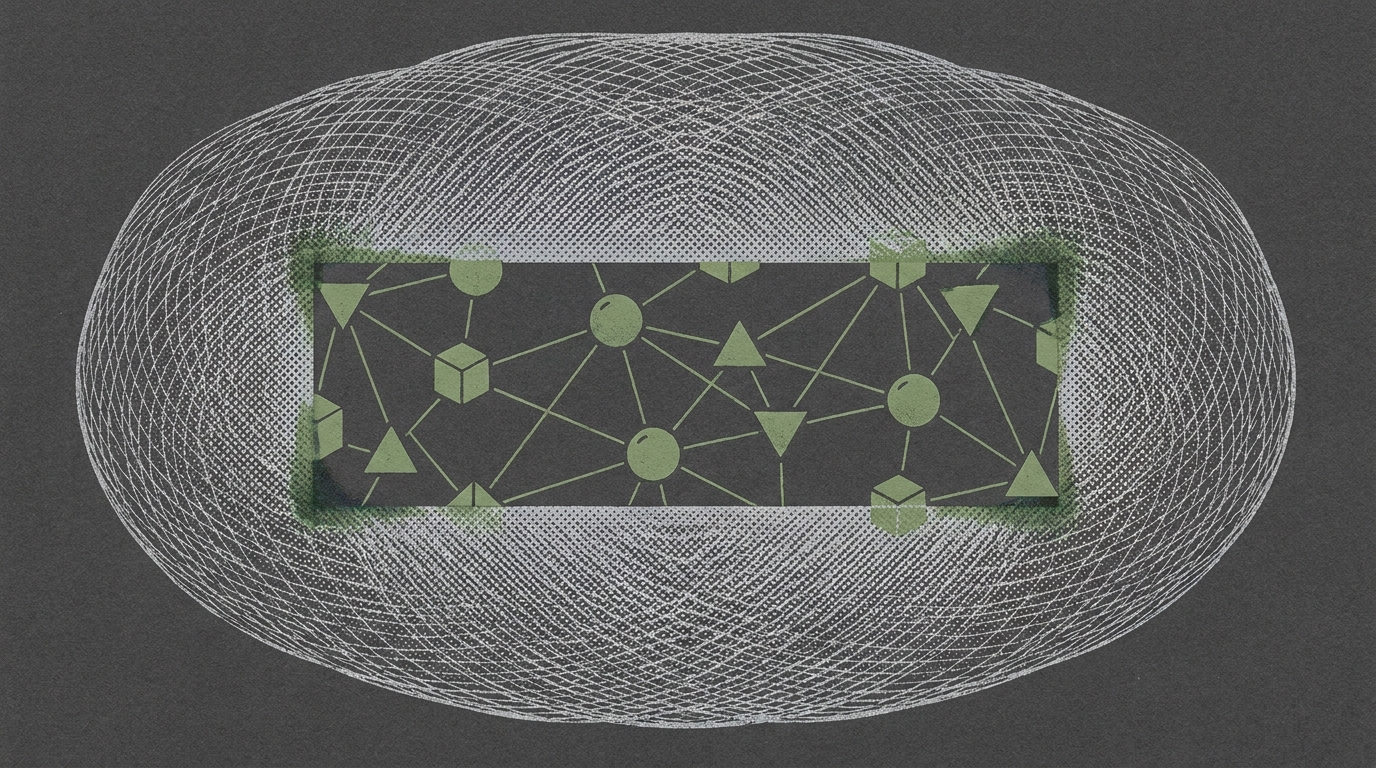
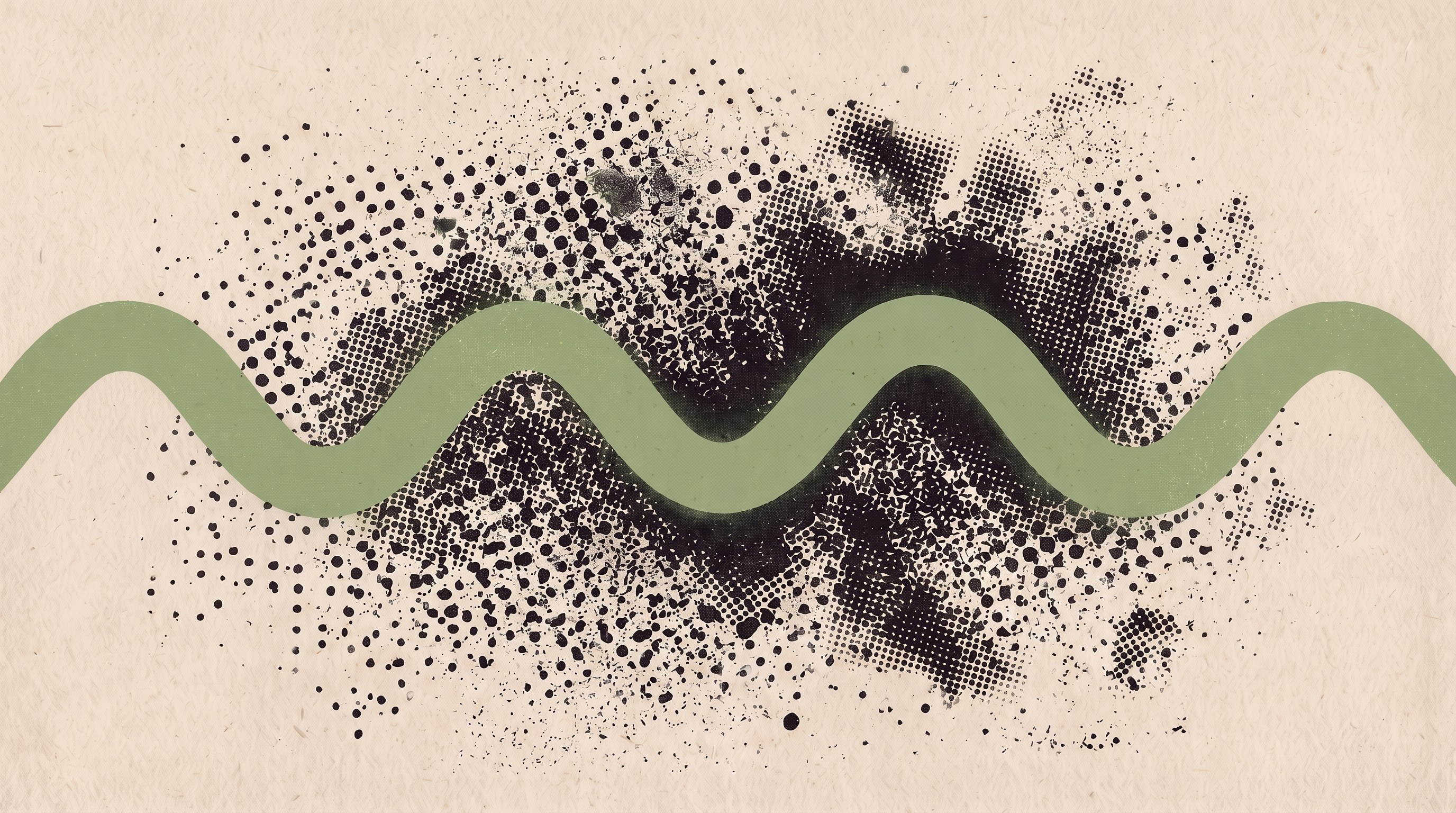
A tuning parameter is essentially a master dial on a mathematical dashboard. Imagine trying to tune an old analog radio. If you turn the dial too far to the left, the model is too rigid, and you only hear muffled silence. If you turn it too far to the right, the model becomes overly sensitive, picking up chaotic, ear-splitting static.
We want the Goldilocks setting, the exact frequency where the true signal comes through cleanly. In nonparametric estimation, where we try to draw a flexible curve through a cloud of data points, this dial controls how many geometric shapes we use to build our curve.
The profound mystery is how to find this perfect setting when we do not know what the true broadcast sounds like. How do we tune a radio to a station we have never heard?
The Tax We Pay to the Oracle
Mathematicians approach this mystery by imagining a mythological entity: the oracle. The oracle represents a hypothetical, omniscient model that already knows the hidden truth of the data. Because we are mere mortals, our models will never perfectly match the oracle. We will always suffer an adaptation price—an economic tax we pay in the form of mathematical error because we have to guess the correct settings.
To minimize this tax, statisticians have developed clever algorithms. One approach is to inch forward in the dark. We start with a completely stiff, basic curve. Slowly, we add one layer of complexity at a time. With each step, we ask if the curve changed enough to justify the extra complication. The moment the curve stops making massive leaps and starts just wiggling in place, we freeze.
This cautious, step-by-step method excels at pinpointing specific, local truths. But what if we are terrified of choosing the wrong path entirely?
The Wisdom of Crowds
Instead of desperately trying to find the single perfect setting on the dial, we can hedge our bets. We calculate the curve for every possible setting on the dial at once.
Then, we take a weighted average of all these different models, giving heavier influence to the ones that have the lowest error rates. In finance, you protect yourself against catastrophic loss by diversifying your portfolio. In statistics, we call this aggregation. By combining dozens of slightly flawed models, their individual errors cancel each other out, leaving behind a shockingly accurate whole.
Aggregation works beautifully for drawing smooth curves. But a completely different crisis emerges when we stop drawing curves and start trying to find a needle in a high-dimensional haystack.
Handing Out Speeding Tickets
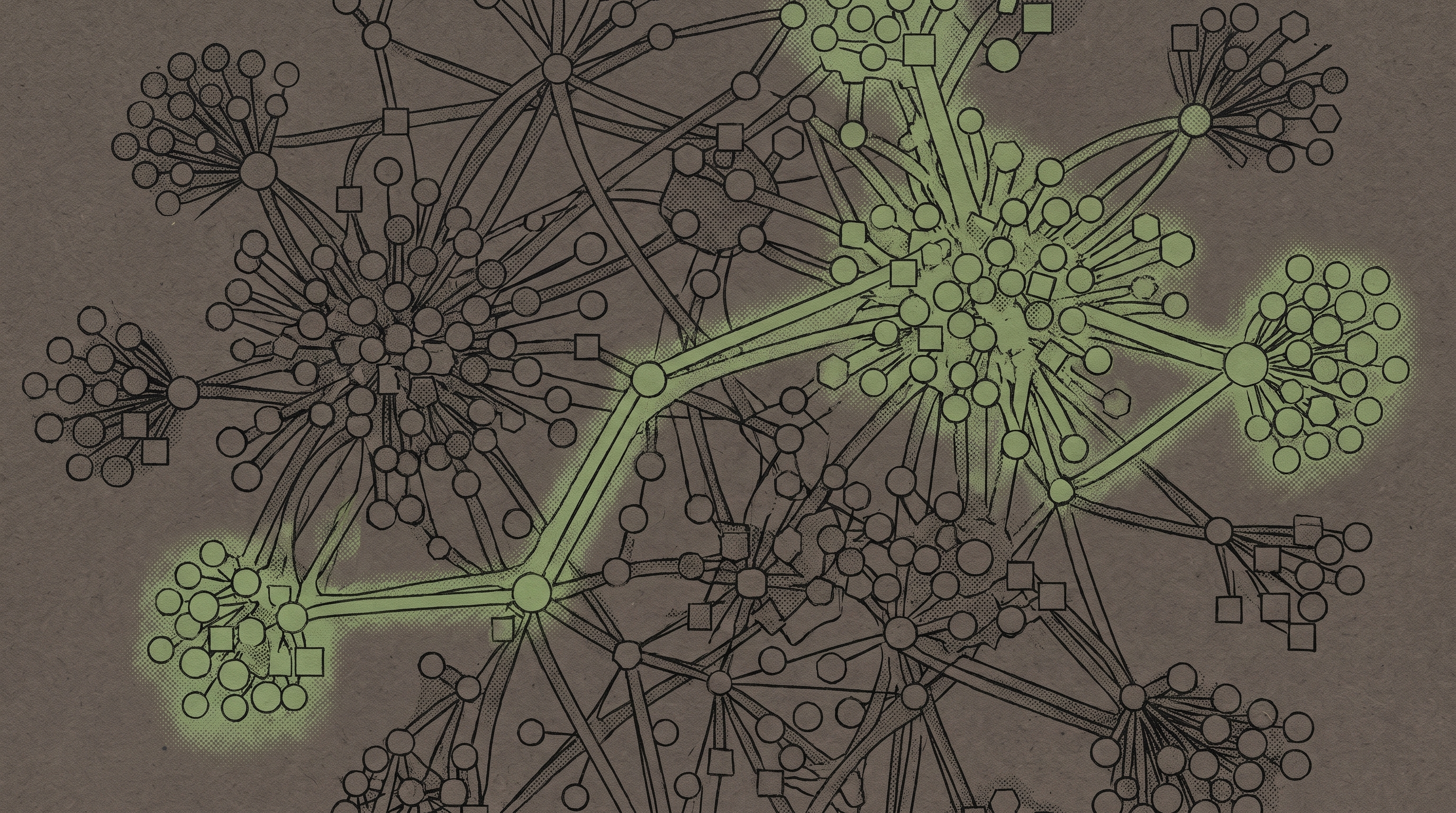
Imagine a dataset with millions of potential variables, but only a tiny handful actually matter. This is a sparse model. If we use traditional math to solve it, the computer will panic and assign a tiny bit of importance to every single useless variable, drowning the true signal.
To survive this, we use a method called the Lasso. The Lasso forces the vast majority of useless variables to exactly zero. It achieves this by applying a brutal mathematical penalty to complexity. Think of this penalty as a speeding ticket: if an equation tries to use too many variables, it gets punished.
Here, the tuning parameter dictates exactly how expensive that speeding ticket is. If the fine is too cheap, random noise slips into the model masquerading as real data. If the fine is too expensive, the model becomes terrified and erases the true variables.
To find the exact boundary between signal and noise, researchers run thousands of simulated alternate realities, a technique called the bootstrap. By simulating the noise over and over, they find the precise critical threshold. They set the speeding ticket just high enough to eliminate the static, but low enough to let the truth survive. Yet, even the most elegant simulation will fail if we misjudge the physical world.
The Cost of Ignoring Reality
Mathematical formulas rely on the assumption that random errors are truly independent. But in the real world, data is messy and connected.
Consider analyzing test scores across an entire country. Students sitting in the same classroom are not independent; they share the same teacher, the same environment, and the same distractions. Their data is clustered. If a researcher blindly applies standard tuning formulas to this clustered data, the algorithm will instantly hallucinate. Because the random noise is synchronized, the computer will mistake that loud, coordinated static for a brilliant new discovery.
To prevent this, the penalty dial must be forcefully cranked up, scaled exactly to the size of the cluster. We must artificially constrain the algorithm to stop it from seeing faces in the clouds. But to do that successfully, we have to know exactly what kind of clouds we are looking at. Only when we fully understand the structure of our own uncertainty can we tune the dial correctly, let the static fade, and finally hear the true signal.